The Question of Bodybuilding — How Much Protein
If you’ve ever asked yourself “Bodybuilding how much protein should I eat per day?”, you’re not alone. It’s one of the most common questions among lifters. The truth is: there’s science behind the numbers — and what works for one person might be overkill for another. Let’s walk through how protein nourishes muscle, why the right “dose” matters and what happens if you eat too little — or too much.
Why Protein Matters for Muscle Growth
Protein isn’t just another macro-nutrient: it’s the building block of muscle. When you lift weights, you create micro-damage in muscle fibres. To repair and grow stronger, your body needs amino acids — the components of protein — to rebuild those fibres bigger and more resilient. The process is called muscle protein synthesis (MPS).
Without adequate protein, your body simply doesn’t have enough “raw material” to rebuild muscle. With the right amount, ideally combined with resistance training, you give your muscles what they need to grow.
How Much Protein Should a Bodybuilder Eat?
The recommended protein intake depends on your body weight, your training intensity, and your goals (bulking, maintenance, cutting). For “regular” sedentary folks, official recommendations are much lower — but for strength training, those numbers jump up considerably.
Here’s a practical framework:
Minimum for non-lifters (RDA): ~ 0.8 grams per kilogram of bodyweight/day — not nearly enough if you’re lifting.
Active / strength-trained individuals: 1.2–1.6 g/kg/day may be enough for maintaining muscle or light training.
Optimal for muscle growth (natural bodybuilders): ~ 1.6–2.2 g/kg/day (≈ 0.7–1.0 grams per pound).
During cutting (calorie deficit) or heavy lifting phases: Some may benefit from the upper end — 2.2 g/kg/day — to preserve muscle mass.
For example: a 90 kg man might aim for ≈ 144–198 g protein/day when trying to build or maintain muscle under training.
Because you weight-train every third day and walk a lot the rest (your routine), hitting something in that 1.6–2.2 g/kg range seems realistic and effective.
What Happens If You Eat Too Little — Or Too Much
Too little protein
Poor recovery & slower gains: Without enough amino acids, muscle repair and growth are limited. Training may even result in net muscle loss.
Higher risk of catabolism: In calorie deficits (or even maintenance) your body may break down existing muscle to meet protein needs.
Weakness over time: Chronic under-consumption can reduce strength, hamper body composition, and lower training performance.
Too much protein
It’s tempting to think “more = better,” but beyond a certain point, returns diminish:
Some evidence shows that above ~2.2 g/kg/day there’s little extra muscle-building benefit for natural lifters.
Excess protein often means extra calories — which can be stored as fat if you’re not careful.
For most healthy individuals, very high protein intakes do not significantly harm kidneys or bones. Still, there’s little upside beyond the “sweet spot.”
Bottom line: loading up on protein beyond your needs is unlikely to build more muscle. It just wastes calories.
Practical Advice for Bodybuilders
Calculate protein based on your body-weight and training status. For most who lift 2–4 times/week: aim for 1.6–2.2 g/kg/day.
Spread protein intake across meals. This keeps muscle protein synthesis more constant — helpful especially if you fast sometimes or eat few meals a day.
Don’t rely only on protein supplements: whole-food sources (meat, fish, eggs, dairy, legumes, etc.) give amino acids and other nutrients.
If you’re cutting/doing keto (like I do), stay toward the higher end of the range to preserve lean mass and satiety.
Pay attention to total calories — protein helps build muscle only if overall energy and training stimulus are sufficient.
Conclusion
If you want to build or preserve muscle — especially the way I train: heavy resistance every third day, long walks otherwise, plus a ketogenic lifestyle — aim for around 1.6–2.2 g of protein per kilogram of your body-weight per day. That range gives your muscles the amino acids they need to recover, grow and stay strong — without excessive calories that might turn to fat. Eating less compromises growth and recovery; eating more gives minimal extra benefit and wastes resources.
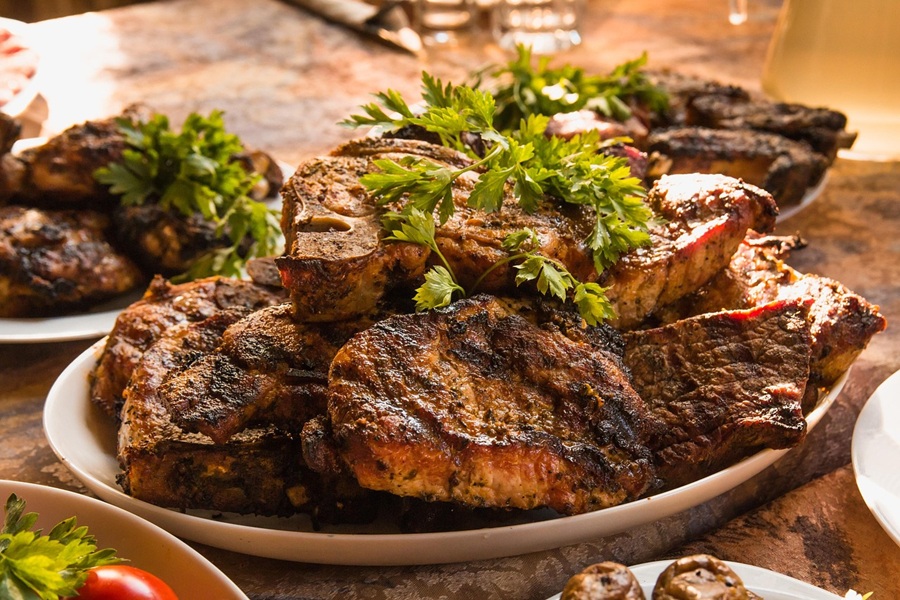
When considering bodybuilding how much protein, stick to good-quality protein sources and don’t shy away from fatty red meat – such as beef, pork and lamb. The myths about cholesterol are currently being blown out of the water, but it’s taking time to become the accepted norm.
Distribute your protein intake sensibly, and let your training do the rest.
The article ‘bodybuilding how much protein’ was written and first published on behalf of Bill Jones Mr Universe on Wednesday 3rd December 2025 at 23:30 and is subject to copyright – All Rights are Reserved.
If you liked this article, you will definitely like this one called the effects of a meat only diet and this one called eating fish for bodybuilding and is on the Gym 21 website.
All the best guys – Bill Jones Mr Universe.
Bill Jones has spent decades helping people of all ages become stronger, healthier and more confident through sensible, consistent bodybuilding. The principles discussed in this article reflect the training philosophy that has made Gym 21 one of Liverpool’s best-known independent gyms.